If you or someone you love is navigating a cancer diagnosis, you have probably come across hyperbaric oxygen and wondered whether it belongs in the plan. HBOT is not a cancer cure, and no responsible clinic will tell you otherwise. What research does support is a real supportive role: helping damaged tissue heal, easing certain side effects of treatment, and getting oxygen to cells that are not getting enough.
Here is what the evidence shows, where it stops, and how HBOT is used as part of integrative cancer support at The Woodlands Institute for Health & Wellness.
What Is HBOT?
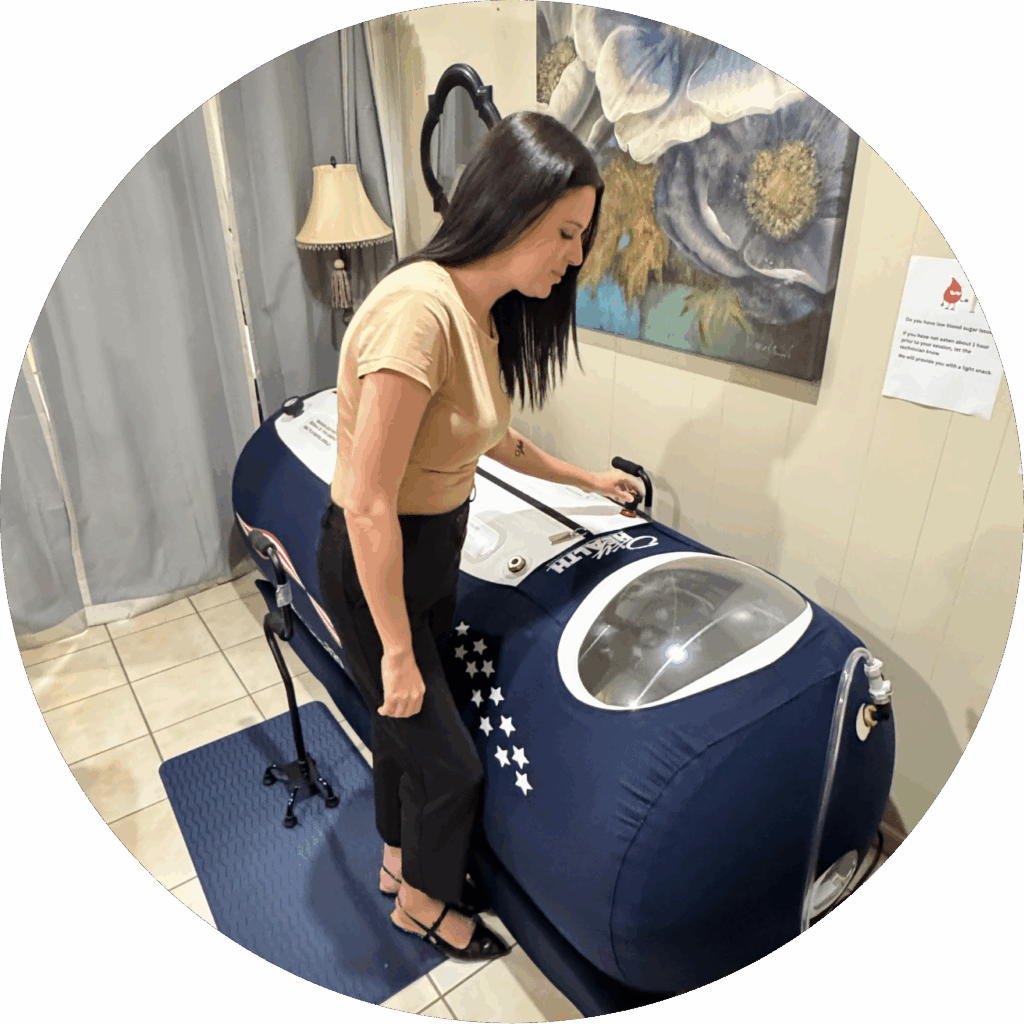
Hyperbaric oxygen treatment involves delivering 100% pure oxygen inside a pressurized chamber. The added pressure allows far more oxygen to dissolve into your blood plasma than you could absorb at normal room pressure, so oxygen can reach tissues that circulation struggles to reach, including areas affected by scarring, radiation damage, or poor blood flow.
Sessions typically run 60 to 90 minutes. Most people describe them as restful, aside from a brief ear-popping sensation as the chamber pressurizes.
The Role of Oxygen in Cancer Care
Tumors grow fast, often faster than the blood vessels feeding them, leaving pockets of tissue deep inside the tumor getting very little oxygen. Doctors call this hypoxia.
Here is why that matters: those low-oxygen pockets are the hardest part of a tumor to treat. Radiation needs oxygen to work well, so it does less damage there. Chemotherapy struggles to reach that tissue through a poor blood supply. And tumors with a lot of hypoxia tend to behave more aggressively.
So researchers have spent decades asking a fairly simple question: if you could get more oxygen into that tissue, would the rest of the treatment work better? A 2025 review in Biomedicine & Pharmacotherapy calls tumor hypoxia a fundamental barrier to effective cancer care, one that drives resistance to chemotherapy, radiation, and immunotherapy alike.
That is the whole idea behind using HBOT in cancer support. HBOT is not attacking the cancer—it changes the conditions inside the body so the treatments that attack have a better shot, and so your tissue has what it needs to repair afterward.
Hyperbaric Oxygen Treatment for Cancer Treatment: How it May Help
Cancer treatment is hard on the body, and much of what patients struggle with comes down to tissue that cannot heal and energy that will not return. This is where HBOT is most useful as supportive care, providing the following potential benefits for patients:
- Healing damage left behind by radiation. Radiation can leave tissue scarred and poorly supplied with blood, sometimes months or years later. HBOT is an established treatment for this kind of delayed injury, helping the body rebuild blood supply in areas that stopped healing on their own.
- Recovering from surgery and stubborn wounds. Incisions that are slow to close or wounds in previously irradiated tissue often improve when oxygen can finally reach them.
- Helping conventional treatment work better. Because radiation and many chemotherapy drugs depend on oxygen to be effective, researchers are studying whether reoxygenating tumors improves how well those treatments work.
- Easing fatigue and brain fog. The exhaustion and cognitive fuzziness that follow treatment are among the most common complaints, and improved oxygen delivery is being studied to support both.
- Supporting immune function and resilience. Low-oxygen tissue suppresses immune activity. Correcting that may help the body do more of its own work during and after treatment.
- Making the whole process more tolerable. Many patients simply report better energy, clearer thinking, and better sleep, which matters enormously when you are getting through months of care.
Does Hyperbaric Oxygen Therapy Work for Cancer? What the Research Supports
This is where precision matters, because the strength of the evidence depends entirely on what you are asking HBOT to do.
Where the evidence is strongest: HBOT is FDA-approved for delayed radiation injury, including soft tissue and bony damage such as osteoradionecrosis, radiation cystitis, and radiation proctitis. For patients dealing with the aftereffects of radiation, this is well-established, insurance-recognized care rather than an experimental idea. It is also FDA-approved for non-healing wounds, which can be relevant after surgery or during treatment that slows healing.
Where the evidence is promising but still developing: Researchers continue to study whether improving tumor oxygenation makes radiation more effective, whether HBOT can help with treatment-related fatigue and cognitive changes, and how it may support immune function and recovery. The 2025 review above found that raising oxygen levels may improve drug penetration and mitigate hypoxia-induced immunosuppression, though the authors are candid that questions remain about ideal dosing and long-term safety. Findings have been encouraging in several areas, but these uses remain off-label and should be framed as supportive rather than curative.
A common concern worth addressing: Many patients ask whether extra oxygen might feed a tumor. It is a reasonable worry, and it has been studied directly. A widely cited review in Targeted Oncology examined the research on hyperbaric oxygen and cancer and found no evidence that it stimulates tumor growth or increases recurrence, noting instead that it may have tumor-inhibitory effects in certain cancer subtypes. That said, the right answer for any individual depends on his or her their diagnosis, treatment stage, and medications, which is exactly why this belongs in a conversation with your care team.
Where the evidence does not go: HBOT does not shrink tumors on its own, does not replace oncology care, and should never be positioned as a reason to delay or decline conventional treatment.
Explore Integrative Cancer Support in Houston, TX
A cancer diagnosis brings enough uncertainty without having to sort credible support from noise on your own. Our specialists at The Woodlands Institute for Health & Wellness help patients across Houston, The Woodlands, Spring, and beyond understand where hyperbaric oxygen therapy fits in their treatment, what it can realistically support, and how it works alongside their oncology care.
If you’d like to try HBOT as part of an integrative cancer support plan, schedule a consultation and talk it through with someone on our team who will give you a straight answer.