What HRV can tell you about stress, recovery, sleep and resilience.
Your heart beats all day, every day. But here’s something you may not know: your heart does not beat like a metronome.
If your heart rate is 60 beats per minute, that does not mean your heart beats exactly once every second. The time between individual beats changes slightly from beat to beat. That variation is called heart rate variability, or HRV.
HRV is becoming an increasingly interesting health measurement because it gives us a window into the autonomic nervous system—the system that helps your body respond to stress, recover, regulate itself and maintain balance.
What Does HRV Tell You?
Think of your autonomic nervous system as having two major modes.
The sympathetic nervous system helps you respond to challenges—your “fight or flight” system. The parasympathetic nervous system helps you rest, digest, recover and restore.
A healthy nervous system needs to move between these states.
In general, higher HRV is associated with greater flexibility in the autonomic nervous system, while lower HRV can occur when the body is under stress or has less capacity for recovery.
But—and this is important—a low HRV reading does not automatically mean something is wrong with you.
Should You Care If Your Watch Says Your HRV Is Low?
Yes—but don’t panic.
Your smartwatch or fitness tracker can be useful for watching patterns, but one isolated number doesn’t tell the whole story.
HRV can be affected by:
- Poor sleep
- Psychological stress
- Illness or infection
- Alcohol
- Overtraining
- Dehydration
- Certain medications
- Age
- Time of day
- How and when the measurement is taken
So if your HRV drops noticeably for several nights, it may be worth paying attention.
You might be getting sick. You may not be recovering from exercise. You may be sleeping poorly or carrying more stress than usual.
That makes HRV interesting—not because it gives you a perfect health score, but because it may give you another piece of information about how your body is handling life’s demands.
What Is a “Good” HRV?
This is where HRV gets confusing.
There is no single number that defines a good or bad HRV for everyone. HRV varies with age, fitness, genetics, medical history, lifestyle, and measurement method. There are no universally accepted HRV guidelines or cutoffs for the general population.
For that reason, your personal or individual trend beats comparison.
If your usual overnight HRV is around 35 milliseconds and it consistently runs between 32–40, that may be more meaningful for you than comparing your 35 to someone else’s 70.
Your baseline matters. Changes from your baseline may matter even more.
What Might Your HRV Be Telling You?
Think of HRV as a conversation with your body rather than a grade on your health report card.
HRV is lower than your normal + you slept poorly:
Your body may be telling you that recovery wasn’t complete. Prioritize sleep and give yourself time to recover.
HRV is lower than normal + you’re feeling run-down:
Your body may be under additional stress. Consider backing off intense exercise, getting adequate sleep and fluids, and paying attention to other symptoms.
HRV is lower than normal + you’ve had several stressful days:
Your nervous system may be carrying a heavier load. Relaxation, breathing exercises, prayer, meditation or quiet time may be helpful.
HRV is lower than normal + you’ve been training hard:
You may need recovery rather than another hard workout. Rest days are part of training.
HRV returns toward your normal after several days:
That’s useful information, too. It may suggest your body is recovering from whatever temporarily challenged it.
The key is to look at the pattern and the circumstances surrounding it, rather than reacting to one number.
How Is HRV Measured?
Clinically, HRV is measured from the tiny changes in the intervals between heartbeats, usually using an electrocardiogram (ECG).
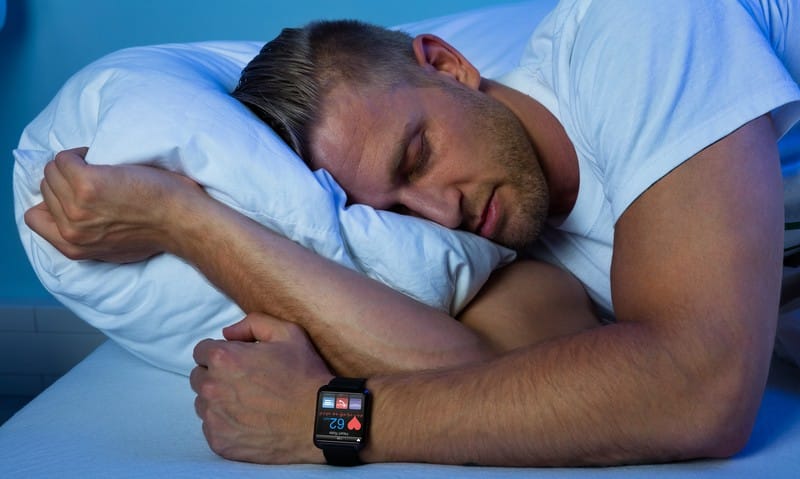
Many watches and fitness trackers use optical sensors called photoplethysmography (PPG) to estimate these beat-to-beat changes. Wearables can be useful for tracking HRV at rest, although their readings are not always interchangeable with ECG measurements.
What Should You Look for in a Device?
If you want to track HRV, look for a wearable that:
- Measures Heart Rate Variability, not just heart rate
- Measures it consistently during rest or sleep
- Allows you to see trends over time
- Uses a consistent measurement method from day to day
- Is comfortable enough that you’ll actually wear it regularly
ECG is the clinical reference method, while many consumer devices use PPG. For personal tracking, consistency is more important than chasing the highest HRV number.
You don’t necessarily need an expensive medical device to learn something useful about your own HRV. A wearable that you use consistently may be more valuable for personal trend tracking than a device you rarely wear.
Can You Increase Your HRV?
You can’t—and shouldn’t—try to force your HRV higher overnight.
Instead, focus on the things that support a resilient nervous system:
Prioritize sleep. Consistent, restorative sleep is foundational to recovery.
Exercise regularly. Research suggests that regular exercise can improve several measures of HRV, although responses vary by individual and type of exercise.
Manage stress. Breathing exercises, meditation, prayer, time in nature and other calming practices may support autonomic regulation.
Don’t underestimate recovery. More exercise isn’t always better. Your body needs recovery time to adapt.
Limit alcohol. Alcohol can negatively affect autonomic function and HRV.
Take care of metabolic health. Healthy nutrition and regular physical activity support overall cardiovascular and autonomic health.
The Right Question to Ask Is…
“What is my normal, and what might my body be telling me when that changes?”
HRV isn’t a magic number—and it isn’t a diagnosis.
But it is becoming an increasingly useful personal health metric because it gives us a glimpse into something that is otherwise difficult to measure: how adaptable and resilient your nervous system may be.
Your wearable may not have all the answers. But learning to recognize your own patterns can be another valuable tool for becoming more informed about your health.
Be Well.
References
- References
- Harvard Health Publishing. How relevant is heart rate variability? November 1, 2025.
Harvard Health — How relevant is heart rate variability? - Cleveland Clinic. Heart Rate Variability (HRV). Medically reviewed; updated September 2, 2026.
Cleveland Clinic — Heart Rate Variability (HRV) - Petek BJ, et al. Consumer Wearable Health and Fitness Technology in Cardiovascular Medicine: JACC State-of-the-Art Review. Journal of the American College of Cardiology. 2023;82(3):245–264.
JACC — Consumer Wearable Health and Fitness Technology in Cardiovascular Medicine - Georgiou K, et al. Can Wearable Devices Accurately Measure Heart Rate Variability? A Systematic Review. Folia Medica. 2018;60(1):7–20.
PubMed — Can Wearable Devices Accurately Measure Heart Rate Variability? - El-Malahi O, et al. Beneficial impacts of physical activity on heart rate variability: A systematic review and meta-analysis. PLOS ONE. 2024;19(4).
PLOS ONE — Beneficial impacts of physical activity on heart rate variability