Red light therapy—more formally called photobiomodulation (PBM)—has moved from the fringe to the mainstream of wellness and medical research. Research is strongest for some applications such as pain, tissue healing and recovery, while other uses—including brain health, inflammation and thyroid function—remain promising but less settled.
Our previous article explained that not all red-light devices are created equal. Let’s dive deeper on some guidelines and specifications for choosing a device:
1. Start with Wavelength
Red light and near-infrared light are not interchangeable. Wavelength, measured in nanometers (nm), influences how deeply light penetrates and which tissues respond.
Commonly studied ranges include 630–660 nm for red light and 810–850 nm for near-infrared. A quality device should tell you its actual wavelengths—not just advertise “full spectrum.”
Example: UCL researchers found that a single three-minute exposure to 670-nm deep-red light in the morning improved color-contrast vision by an average of 17% in a small study of adults aged 37–70. Interesting, but it does not prove every device will improve eyesight.
If a company won’t tell you the wavelengths, that’s a red flag. Based on research results so far, we do know this:
- 620–630 nm: Red light, shallow (skin surface) penetration, reduces inflammation, improves circulation, supports wound healing, and improves skin barrier
- 660–670 nm: Red light, medium (epidermis/dermis) penetration, boosts collagen, reduces wrinkles, treats acne, improves skin tone
- 810–830 nm: Near-Infrared (NIR), deep (muscle & joints), speeds muscle recovery, reduces joint pain, supports brain function
- 850 nm+: Near-Infrared/Infrared, deepest (up to bone) penetration, enhances endurance, supports bone repair, reduces inflammation.
2. Ask About Intensity—or Irradiance
Irradiance tells you how much light is actually reaching your body and is usually reported as mW/cm². Distance matters.
For example, a whole-body research protocol using a Joovv Elite system positioned participants 20 cm (about 8 inches) from the panels and measured combined irradiance of 81.62 mW/cm² from 660-nm red and 850-nm near-infrared light.
Mito Red Light, for example, currently lists more than 160 mW/cm² at 6 inches on several MitoPRO X panels, based on professional spectroradiometer testing.
Don’t shop by “high intensity” or “medical grade.” Look for measured irradiance, distance, wavelengths, and testing method.
3. Understand Dose—and Remember That More Isn’t Always Better
Irradiance tells you how much light is delivered. Treatment time tells you how long you’re exposed. Dose combines the two and is commonly expressed as J/cm².
There is no single ideal dose; research uses a wide range depending on wavelength and goal. Roughly 4–10 J/cm² is a commonly studied range, but some applications use considerably more.
PBM also appears to have a biphasic response: too little may do little, while more is not necessarily better. In other words, there appears to be a therapeutic window. At our facility, we generally recommend 10-15 minutes of full body (front and back at same time) exposure. We advise sensitive patients to start at 5 minutes full body, or 5 minutes each side if exposing one side of body at a time.
4. What About Hz?
Hz, or Hertz, refers to frequency. A device pulsing at 10 Hz modulates the light 10 times per second.
There is no universally optimal frequency for red-light therapy. Research has explored many frequencies, with 10 Hz and 40 Hz receiving particular attention, especially in neurological research. Forty Hz is of interest because it falls within the brain’s gamma-frequency range and may support healthy cognition.
Don’t choose a device simply because it advertises a higher Hz number. If pulsed, look for the frequency.
5. Consider the Size of the Treatment Area
A handheld device may be useful for a specific area. A mask, for example, is designed for the face. A mat is designed to wrap around a specific area, and a red light cap is generally recommended for supporting hair growth and/or brain health.
For whole-body exposure, size and consistency matter. You want reasonably similar exposure across the treatment area.
Treatment time and frequency matter, too. Whole-body protocols vary, but research and manufacturer protocols commonly use sessions around 10–20 minutes per treatment area, several times per week.
A larger panel can expose more tissue and reduce the need for repositioning.
What About Impressive Marketing Claims?
“Maximum penetration.” “Medical grade.” “Professional strength.” “High intensity.”
These phrases sound impressive, but they don’t tell you enough. A quality device should clearly identify its wavelengths, measured irradiance, recommended distance, treatment time, treatment area, and, if applicable, pulsing frequency.
So, What Should You Remember?
You don’t need to become a photobiomodulation expert. Just know enough to look past the marketing.
- Wavelength = What kind of light?
- Irradiance = How much light reaches you?
- Dose = How much light over time?
- Distance = How far away?
- Treatment area = How much of you is exposed?
- Hz = Continuous or pulsed, and at what frequency?
And perhaps most importantly: don’t assume that more is better.
Different manufacturers may recommend different distances, session lengths, and frequencies—and that’s okay. A device delivering 50 mW/cm² may require different treatment time than one delivering 100 mW/cm². Follow the manufacturer’s recommended distance, treatment time, and frequency as a complete protocol rather than mixing numbers from different devices or studies.
When shopping, look for:
- Specific wavelengths: Commonly studied ranges include 630–660 nm red light and 810–850 nm near-infrared light.
- Measured irradiance: Look for the output in mW/cm² at a stated distance. A rough 40–100 mW/cm² range is a useful benchmark—not a universal prescription.
- A reasonable dose: 4–10 J/cm² is a commonly studied range, although there is no magic number for every application.
- A clearly stated treatment distance: The manufacturer should inform you regarding how far from the device you are supposed to be.
- Adequate treatment area: For whole-body use, look for broad, reasonably even coverage.
- Pulsing information: If the device uses pulsed light, look for the actual Hz rather than vague claims about “pulsing.”
- A clear treatment protocol: The manufacturer should tell you how long and how often to use the device.
These are shopping guidelines, not prescriptions. Different devices can have different specifications and still be legitimate. What matters is that the manufacturer is transparent about the numbers and provides a clear protocol.
Don’t shop for the biggest numbers. Shop for transparency, measurable output, appropriate wavelengths, and a clearly defined protocol.
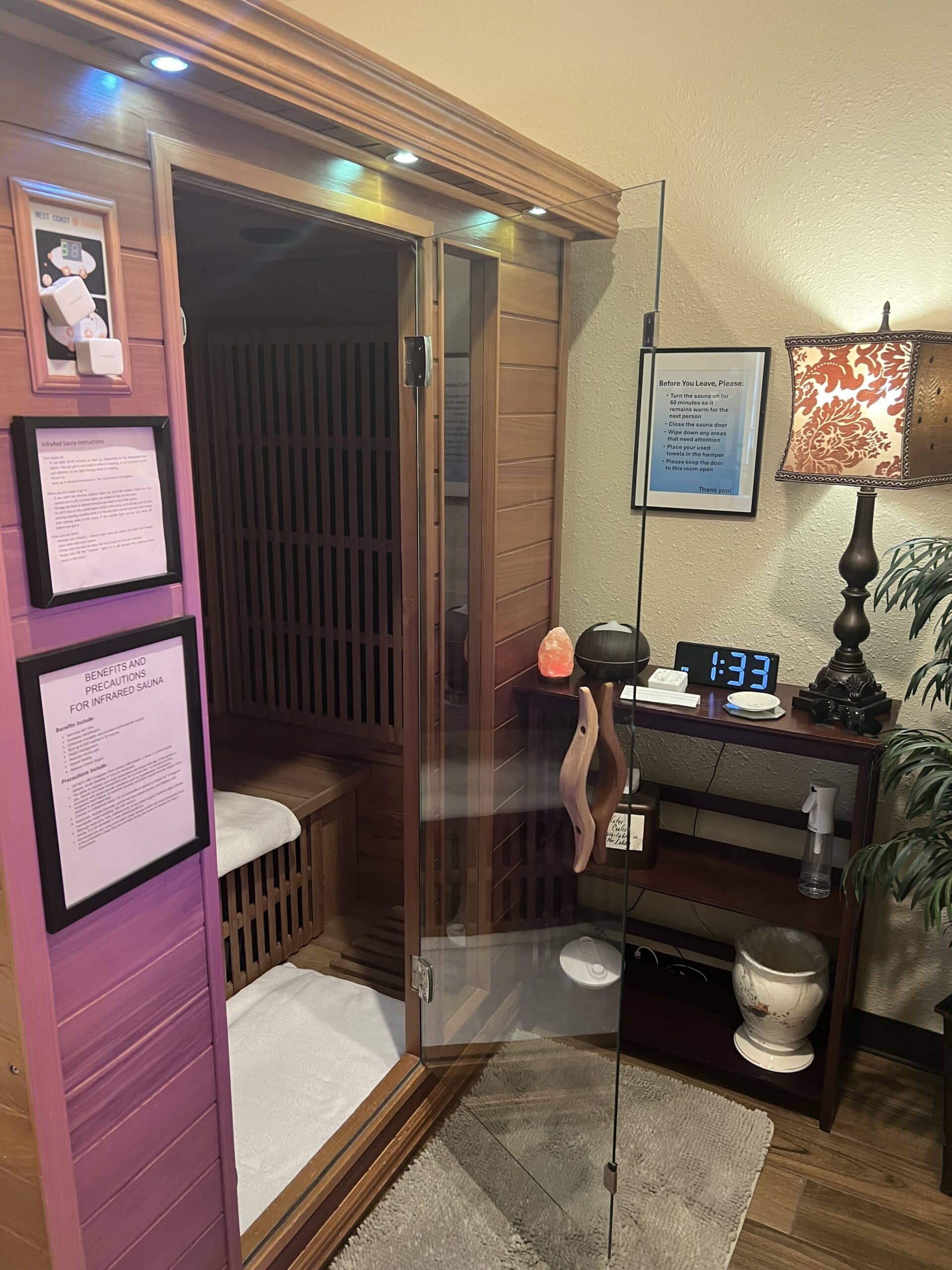
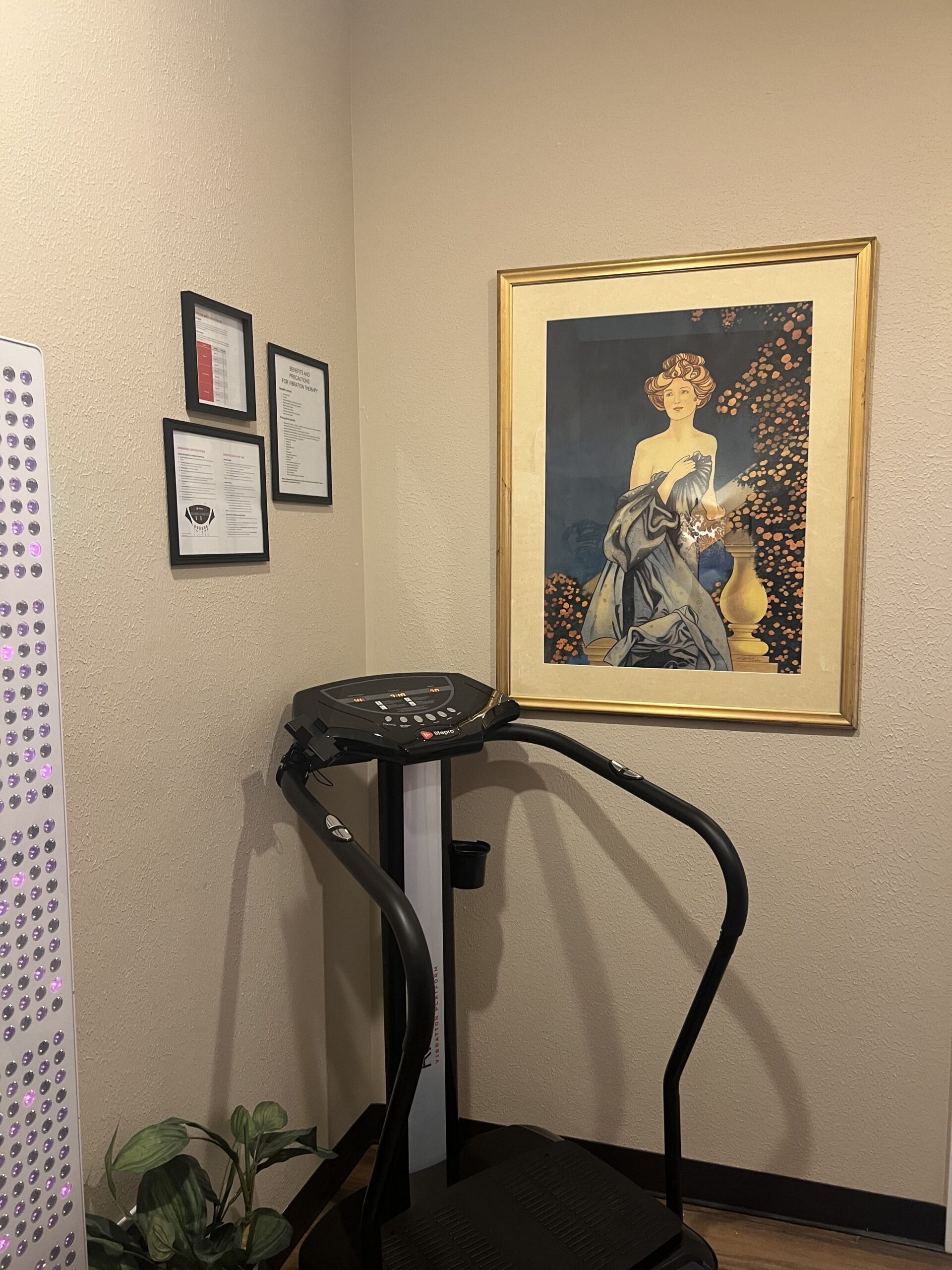
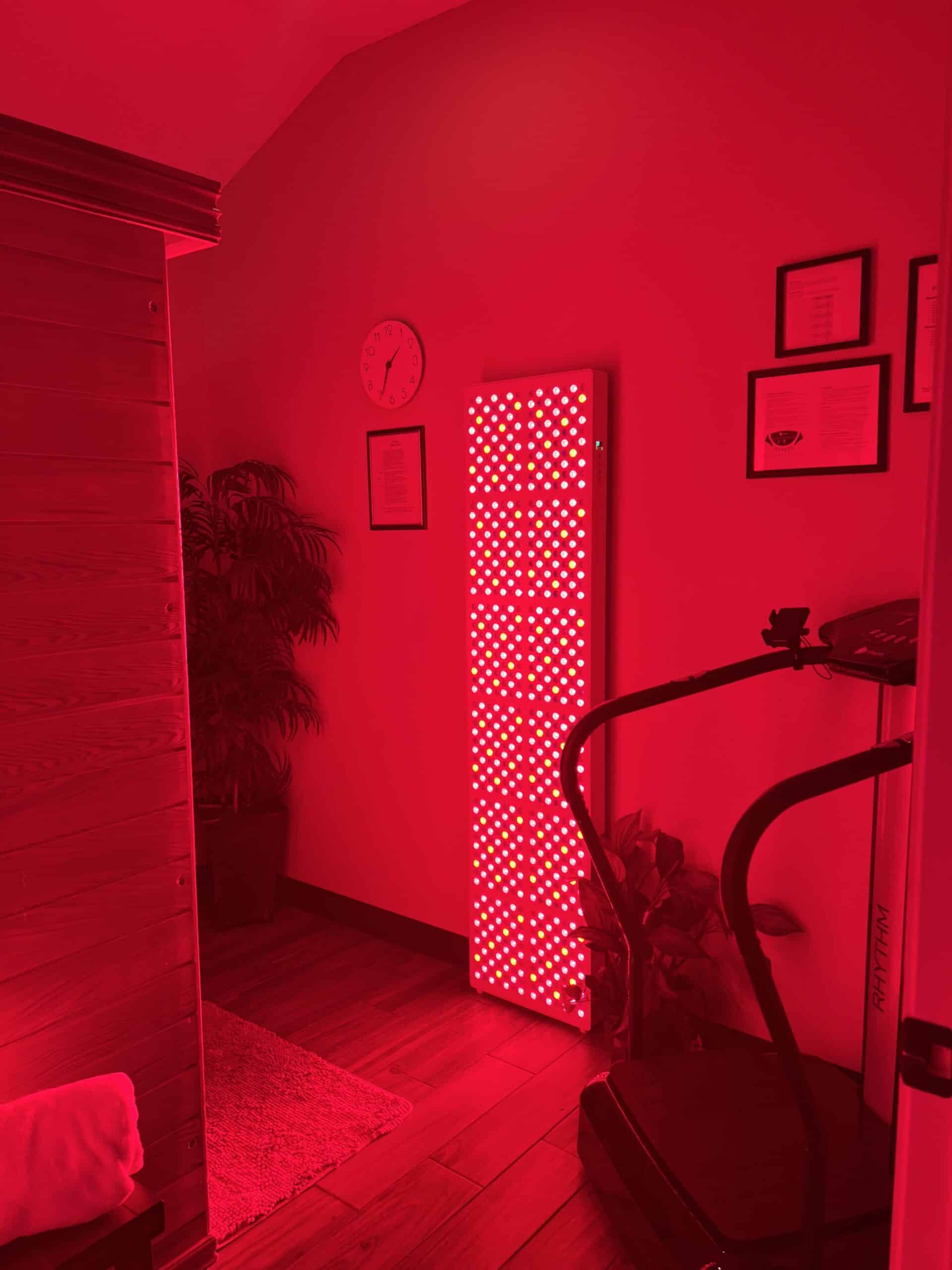
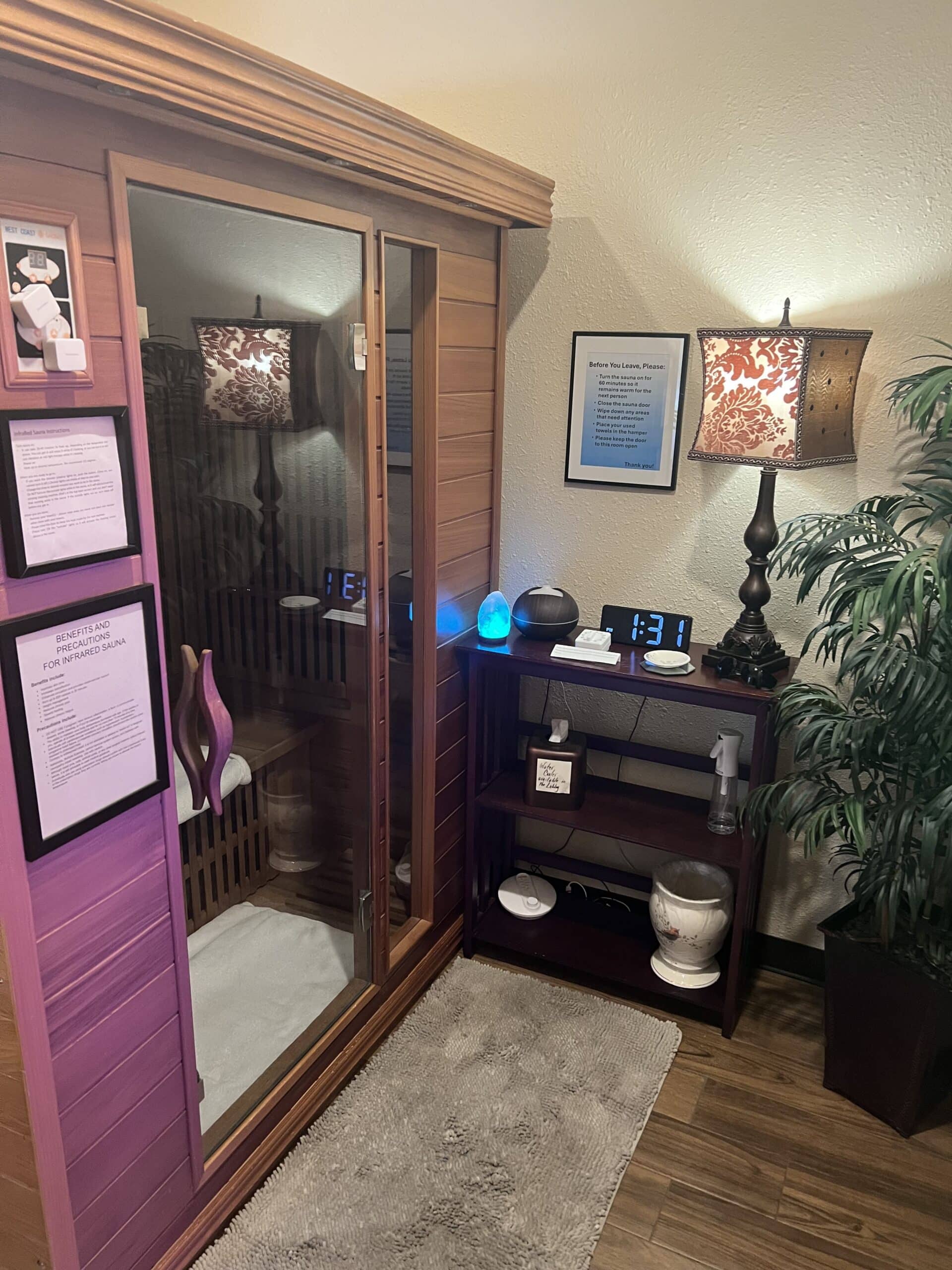
And if you’re curious what a commercial-grade full-body system feels like, come experience our red-light therapy in the Detox & Recovery Room or Recharge Room.
Be Recharged. Be Well.
References
- Zein R, Selting W, Hamblin MR. Review of light parameters and photobiomodulation efficacy: dive into complexity. Journal of Biomedical Optics. 2018. PubMed — Review of light parameters and PBM efficacy
- ClinicalTrials.gov — Whole-Body Photobiomodulation using Joovv Elite. This provides the concrete research example: 660/850 nm, 20 cm distance, 81.62 mW/cm², and defined treatment times/doses. ClinicalTrials.gov — Joovv Elite whole-body PBM protocol
- Mito Red Light — MitoPRO X specifications. Manufacturer-reported irradiance, wavelengths, panel dimensions and testing methodology. MitoPRO X specifications
- Shinhmar H, et al. Weeklong improved colour contrast sensitivity after single 670 nm exposures associated with enhanced mitochondrial function. Scientific Reports. 2021. Scientific Reports — 670-nm vision study
- Ercetin C, et al. Impact of Photobiomodulation on T3/T4 Ratio and Quality of Life in Hashimoto Thyroiditis. Photobiomodulation, Photomedicine, and Laser Surgery. 2020. Study of 350 patients. PubMed — Hashimoto’s PBM study
- WALT — World Association for Photobiomodulation Therapy. Dosage recommendations and scientific resources. WALT Dosage Recommendations
- Johns Hopkins Medicine. Red-light therapy overview, including the distinction between home devices and physician-administered treatments. Johns Hopkins Medicine — Red Light Therapy